Knowledge Centre
Micro Dose. Quantum Results.
Everything Canadian researchers want to understand — what peptides are, why they matter, how to choose a trusted supplier, reconstitution & storage, the mistakes to avoid, and the most-requested compounds.
Jump to a section
Peptides occur naturally in the body (endogenous) but can also be administered from outside sources (exogenous). At their simplest, peptides are short strings of amino acids.
The human body needs an adequate supply of 20 amino acids to function properly, but those 20 can combine into thousands of unique sequences to form different peptides, each with its own distinct biological role.
The Core Idea
By supplementing your endogenous supply with exogenous peptides, you give the body more of the resources it needs to carry out specific functions and self-regulate.
Search “peptides Canada,” “BPC-157 Canada,” or “where to buy peptides in Canada” and you'll find hundreds of articles, Reddit threads, and vendors. Peptides have become popular because researchers are exploring them for:
While peptides aren't new, the science behind them has grown massively. Canadians want alternatives to harsh pharmaceuticals, and peptides offer a targeted, biological approach with fewer side effects.
The Real Challenge
The hard part is finding pure, high-quality peptides in a market full of poorly manufactured products. That's why your choice of supplier matters more than anything else.
Finding pure, research-grade peptides in Canada is the biggest challenge in a market flooded with low-quality products. Here's what separates Quantum Peptides from risky overseas vendors.
A reputable company prioritizes transparency. At Quantum Peptides, our products undergo:
Ordering from China or the U.S. slows shipping and drastically increases the risk of customs seizures. Canadians prefer domestic suppliers because of:
Why Researchers Choose Quantum Peptides
How peptides are handled plays a major role in both safety and effectiveness. This section covers reconstitution, injection technique, storage, and managing common injection-site reactions — so you get consistent results, less discomfort, and predictable outcomes over time.
Many peptides are dispensed in a lyophilized (powdered) form and must be reconstituted with bacteriostatic water before use.
Two Golden Rules
An injection pen is a reusable device that holds your reconstituted peptide in a glass cartridge and lets you dial an exact dose, then deliver it through a fine, disposable pen needle. Many researchers prefer pens because they make repeat dosing faster, more consistent, and far easier to measure than drawing every dose with a separate syringe.
Important
Failing to remove air from the canister before filling the cartridge will cause pressure to push the stopper out — and you will lose all of your peptide. This step is non-negotiable.
Most peptides are given subcutaneously — into the fatty tissue just beneath the skin. In some cases a provider may recommend intramuscular injection.
Certain peptides, such as BPC-157 or TB-500, may be injected closer to an injury site if advised by a provider.
Technique That Reduces Discomfort

Common subcutaneous injection sites
Some peptides can be safely combined into a single syringe to reduce the number of injections, improving comfort and consistency when done correctly.
Some peptides lose effectiveness or increase irritation when mixed. If there's any uncertainty, inject them separately or consult a provider.
Mix Safely
Mild redness, itching, swelling, or small hives at the site are relatively common and usually not a true allergy — typically a localized immune response or technique-related.
Reconstitute powdered peptides only when ready to use, and avoid repeated freezing and thawing whenever possible.
The 28-Day Rule
Keep powdered peptides cold and reconstitute only what you'll use soon. Always store vials away from light and heat, and never refreeze a reconstituted solution.
How do I know it was reconstituted correctly? A properly reconstituted peptide is clear and free of visible particles. Cloudiness or discoloration means it should not be used.
Can peptides be left out of the fridge? Most stay stable at room temperature for several days if kept from heat and sunlight. Short periods unrefrigerated usually affect potency rather than safety — refrigerate again as soon as possible.
Why does my site itch or turn red? Usually a localized immune response, not a true allergy. Rotating sites and injecting slowly often reduces symptoms.
How long should one vial last? Most vials last roughly four to five weeks when used as intended; minor variation in duration is normal and doesn't affect results.
↑ Back to sectionsPeptides require precise measurement, specific storage, and a consistent protocol — so a single small error can erase your results and waste money. These are the mistakes that trip up nearly every first-time user, and the simple fixes for each.
Harm: diluted, mislabeled, or contaminated product means zero results — and you wrongly conclude peptides don't work.
Fix: buy only with recent, batch-specific third-party COAs confirming identity and ≥98% purity. No COA? Walk away.
Harm: sterile water has no preservative, so the solution degrades in 1–3 days.
Fix: use bacteriostatic water (0.9% benzyl alcohol); refrigerated, it keeps peptides potent up to ~28 days.
Harm: below the minimum effective threshold the peptide does nothing — same as not using it.
Fix: follow established protocols and use our calculator to convert mg↔mcg and get the right draw.
Harm: pain relief arrives before the tissue is fully healed; quitting early invites relapse.
Fix: commit to the full cycle — typically 6–8 weeks, up to 12 for chronic injuries.
Harm: heat and light break peptide bonds; the 28-day shelf life only holds when cold.
Fix: store reconstituted vials at 2–8°C, away from light; keep powder frozen; use a cooler when travelling.
Harm: you can't tell which compound caused a benefit or side effect, making troubleshooting impossible.
Fix: start one peptide for one goal, run a full cycle, track results, then add others.
Harm: irregular timing prevents stable therapeutic levels and sabotages results.
Fix: set a strict schedule (twice-daily ~10–12h apart, same time daily, same day weekly) and use reminders.
Harm: shaking foams and denatures fragile peptides, destroying their activity.
Fix: aim water at the glass wall, then swirl gently or let it dissolve in the fridge 15–30 min. Never shake.
Harm: without data you can't tell if it's working or troubleshoot side effects.
Fix: keep a log of dose/time, injection site, how you feel, and objective metrics (pain, weight, lifts).
Harm: liquids degrade in ~28 days and ship outside a cold chain — likely useless on arrival, and a red flag.
Fix: buy lyophilized powder and reconstitute it yourself just before your cycle.
Harm: any vial not used within ~28 days loses potency — wasted product and money.
Fix: only mix what you'll use in 28 days; reconstitute one vial at a time.
Harm: peptides optimize natural pathways, not steroid-like overnight change; disappointment leads to quitting or overdosing.
Fix: expect subtle, cumulative gains alongside diet, sleep, and training — and track your progress.
Below is a breakdown of the peptides researchers request most frequently.
The “King of Recovery” and the most-searched peptide in Canada, studied for its role in healing gastric ulcers and repairing soft tissue — tendons, ligaments, and muscle.
View BPC-157 →Often stacked with BPC-157, TB-500 focuses on cell migration and the formation of new blood vessels (angiogenesis).
View TB-500 →A favorite in aesthetic and longevity research, widely studied for its ability to stimulate collagen and improve skin firmness. Featured in our GLOW and KLOW stacks.
View GHK-Cu →Raises plasma growth-hormone levels sustainably. Unlike synthetic GH, it stimulates the pituitary to release the body's own natural growth-hormone pulses.
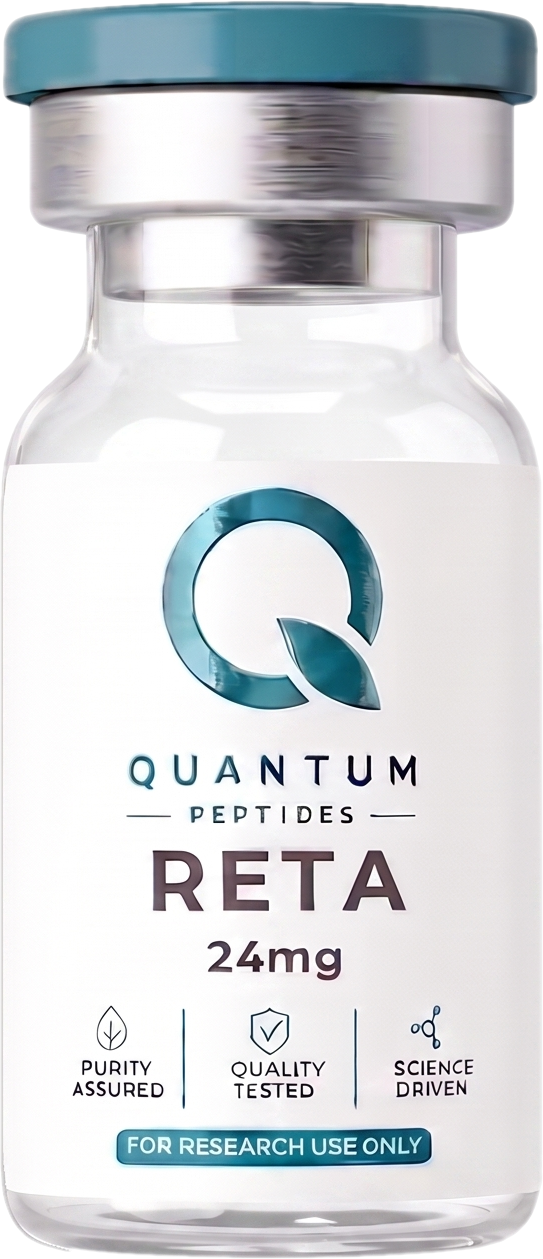
View CJC-1295 →A next-generation metabolic peptide that activates three receptors at once — GLP-1, GIP, and glucagon. This triple mechanism is studied for powerful effects on appetite regulation, glucose metabolism, and energy expenditure, going beyond single- or dual-agonist compounds.
View RETA 24mg →Targets both GLP-1 and GIP receptors. This dual mechanism offers a synergistic effect on glucose metabolism and appetite regulation that surpasses single-agonist compounds.
View Tirzepatide →Technically a coenzyme often grouped with peptides, NAD+ is foundational for mitochondrial health and DNA repair.
View NAD+ →Often called the “exercise mimetic,” MOTS-c is researched for its ability to improve exercise capacity and regulate metabolic homeostasis.
View MOTS-c →Originally approved for reducing visceral (stomach) fat, it is now a top-tier research peptide for its potent growth-hormone-stimulating effects.
View Tesamorelin →Crosses the blood-brain barrier and stimulates production of Brain-Derived Neurotrophic Factor (BDNF) and Nerve Growth Factor (NGF).
View Semax →References: 1. Roles of proteins in the body. 2. The 20 standard amino acids required for protein synthesis. Reconstitution, injection, storage, and beginner-mistake guidance adapted from standard peptide-handling best practices.
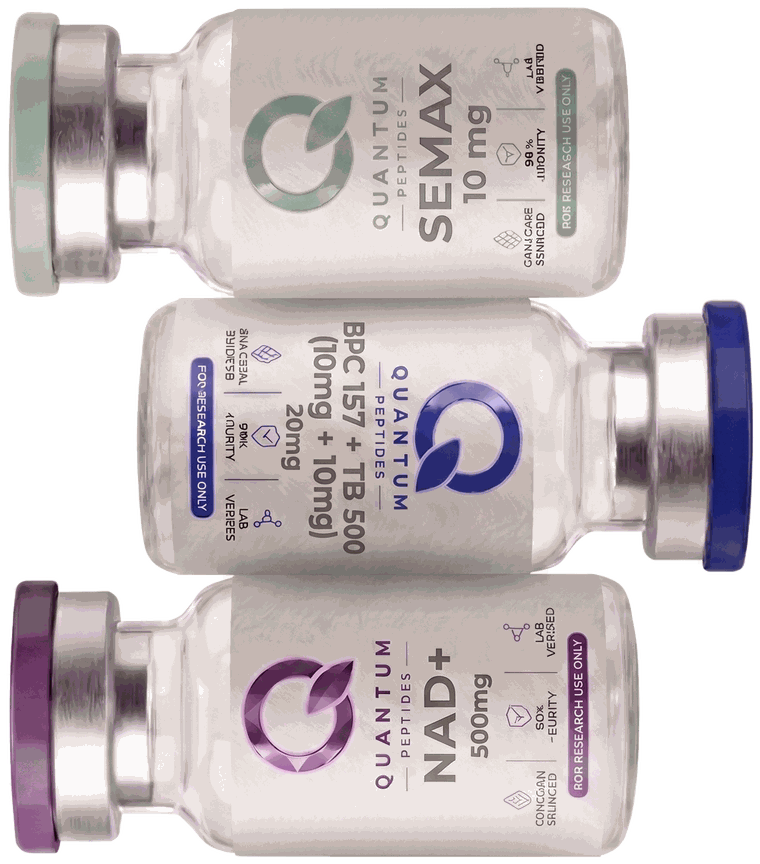
Take our quick quiz for a peptide stack matched to your goals — plus 20% off your recommended stack.
Build Your Stack →